


-
OLIVIKO™ Handmade Olive Wood Cutting Board – 14, 16 & 20 in
Regular price From $83.99 CADRegular priceUnit price per -
OLIVIKO™ Rectangular Olive Wood Cutting Board – 40 cm (16 in)
Regular price $95.99 CADRegular priceUnit price per -
OLIVIKO™ Small Olive Wood Chopping Board – 12.5 × 7.25 in (32 × 18 cm)
Regular price $53.99 CADRegular priceUnit price per -
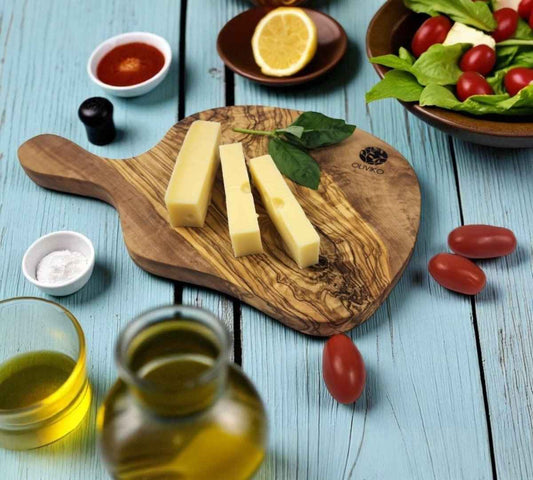
OLIVIKO™ Olive Wood Cutting Board with Handle – 20 × 8 in (50 × 20 cm)
Regular price $119.99 CADRegular priceUnit price per




Olive Wood Cutting Board Buying Guide
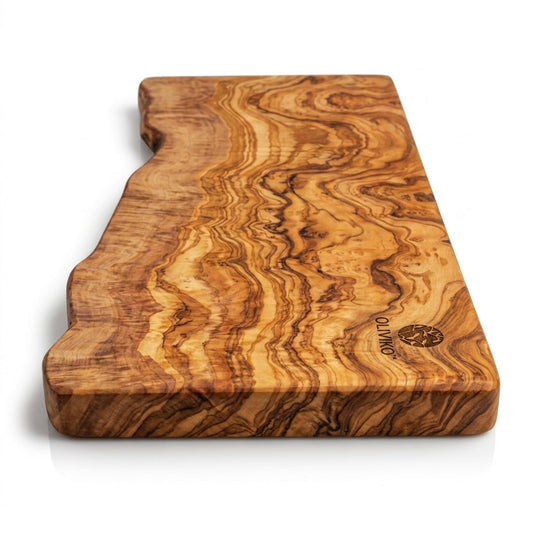
Each OLIVIKO olive wood cutting board is handcrafted from a single piece of solid olive wood, never laminated or glued. Naturally dense, food-safe, and exceptionally durable, these boards bring warmth, character, and authentic Mediterranean craftsmanship to your kitchen.
✔️ Solid Olive Wood
✔️ No Glue or Chemicals
✔️ Naturally Food-Safe
✔️ Handcrafted – Each Piece Unique
Why Choose an Olive Wood Cutting Board?
Olive wood cutting boards are prized for their strength, their tight, moisture-resistant grain, and their distinctive patterns. As a dense hardwood, olive wood resists deep knife marks and moisture absorption better than many common alternatives, helping maintain a clean cutting surface.
Unlike plastic or composite boards, olive wood does not release synthetic particles into food and develops a beautiful patina with use. Each cutting board is naturally unique, combining functionality with timeless design, perfect for everyday food preparation, serving, and presentation.
At OLIVIKO, our cutting boards are carefully handcrafted to balance durability, safety, and visual appeal without the use of chemical treatments or adhesives.
Which Board Is Right for You?
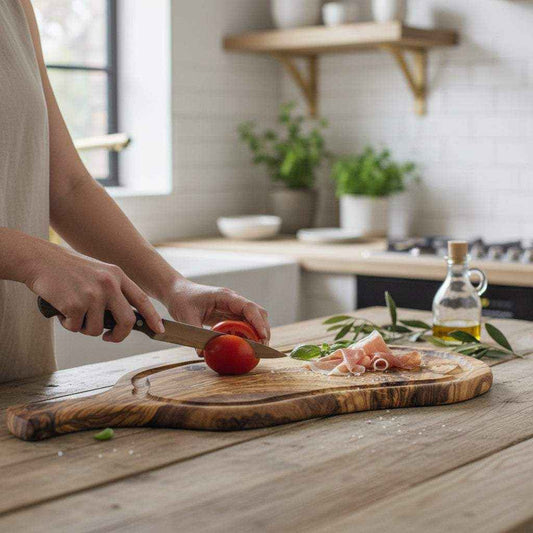
Our collection covers everyday chopping, slicing, serving, and display. Choose the small 12.5 × 7.25 in chopping board for quick everyday prep, the 16 × 8 in or 40 cm rectangular board for daily meal prep, a board with a handle for carrying bread and cheese to the table, or the oval 35 cm board for charcuterie and presentation. Every size is cut from solid olive wood, so each one works for both prep and serving. For more help, read how to choose the right olive wood cutting board.
Olive Wood Serving & Charcuterie Boards
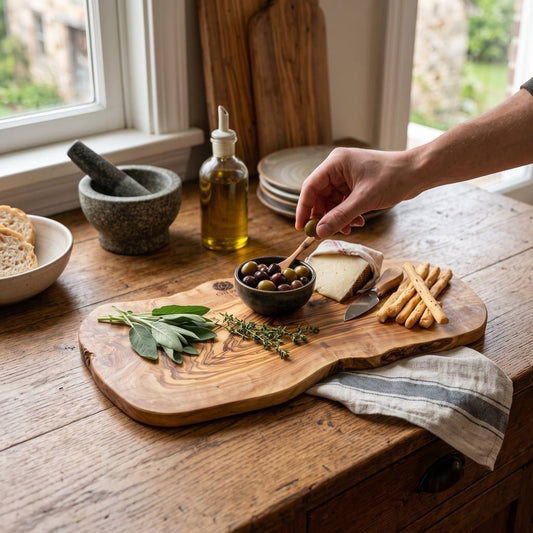
Olive wood is one of the most popular woods for serving boards, cheese boards, and charcuterie boards. Its swirling grain turns every board into a centerpiece, and its density means it holds up to slicing cheese, bread, and cured meats right at the table.
- Cheese or charcuterie for 2–4 people: the oval 35 cm (14 in) board or the organic-shaped 16 × 8 in board.
- Larger gatherings: the 40 cm (16 in) rectangular board gives you the most flat surface for spreading out a full platter.
- Bread, olives, and quick snacks: the small 12.5 × 7.25 in chopping board.
Tip: keep one board for raw meat prep and another for serving. After serving, wipe the board clean, dry it upright, and re-oil it occasionally so the grain stays rich.
How to Care for Olive Wood Cutting Boards
Proper care helps extend the life and beauty of olive wood cutting boards.
- Hand wash with mild soap and warm water
- Dry immediately after washing
- Avoid soaking or dishwasher use
- Apply food-grade mineral oil occasionally to nourish the wood (avoid cooking oils, which can turn rancid)
With simple care, olive wood cutting boards remain durable, clean, and visually rich for years of daily use. Learn more in our olive wood cutting board care guide and our guide on how to oil an olive wood cutting board.
Olive Wood Cutting Boards vs Other Materials
Olive Wood vs Bamboo
Olive wood is denser than bamboo and carved from one solid piece, so it has no glue seams to separate over time. Read our full comparison →
Olive Wood vs Plastic
Plastic boards develop deep knife grooves and can shed microplastics, while olive wood stays smooth and long-lasting with basic care.
Olive Wood vs Maple or Walnut
Olive wood is harder, with a tighter grain and a far more distinctive look; maple and walnut are softer and a little gentler on knives. Compare the best woods for cutting boards →
Frequently Asked Questions About Olive Wood Cutting Boards
Are olive wood cutting boards food-safe?
Yes. Olive wood is naturally food-safe and does not require chemical coatings or sealants.
Can olive wood cutting boards be used every day?
Yes. They handle everyday light to moderate prep and serving very well. For heavy all-day chopping, choose a larger, thicker board. Is olive wood good for cutting boards? →
Do olive wood cutting boards dull knives?
Olive wood is a dense hardwood, so it is slightly firmer on blades than softer woods like walnut or maple. For normal home use with a sharp knife, the difference is small.
Are olive wood cutting boards dishwasher-safe?
No. Hand washing and immediate drying are recommended to preserve the wood.
Is each cutting board the same?
No. Each board features unique grain patterns and natural variations, making every piece one of a kind.


-

Outstanding Quality
We pride ourselves to offer only the best quality in class. No compromises.
-

Free Retuns
Have peace of mind with our free return policy. Terms may apply.
-

Secure payments
100% secure and protected payments. Shop with your preferred option.


